Fried Croissant Beignets-Easy Dessert Recipe
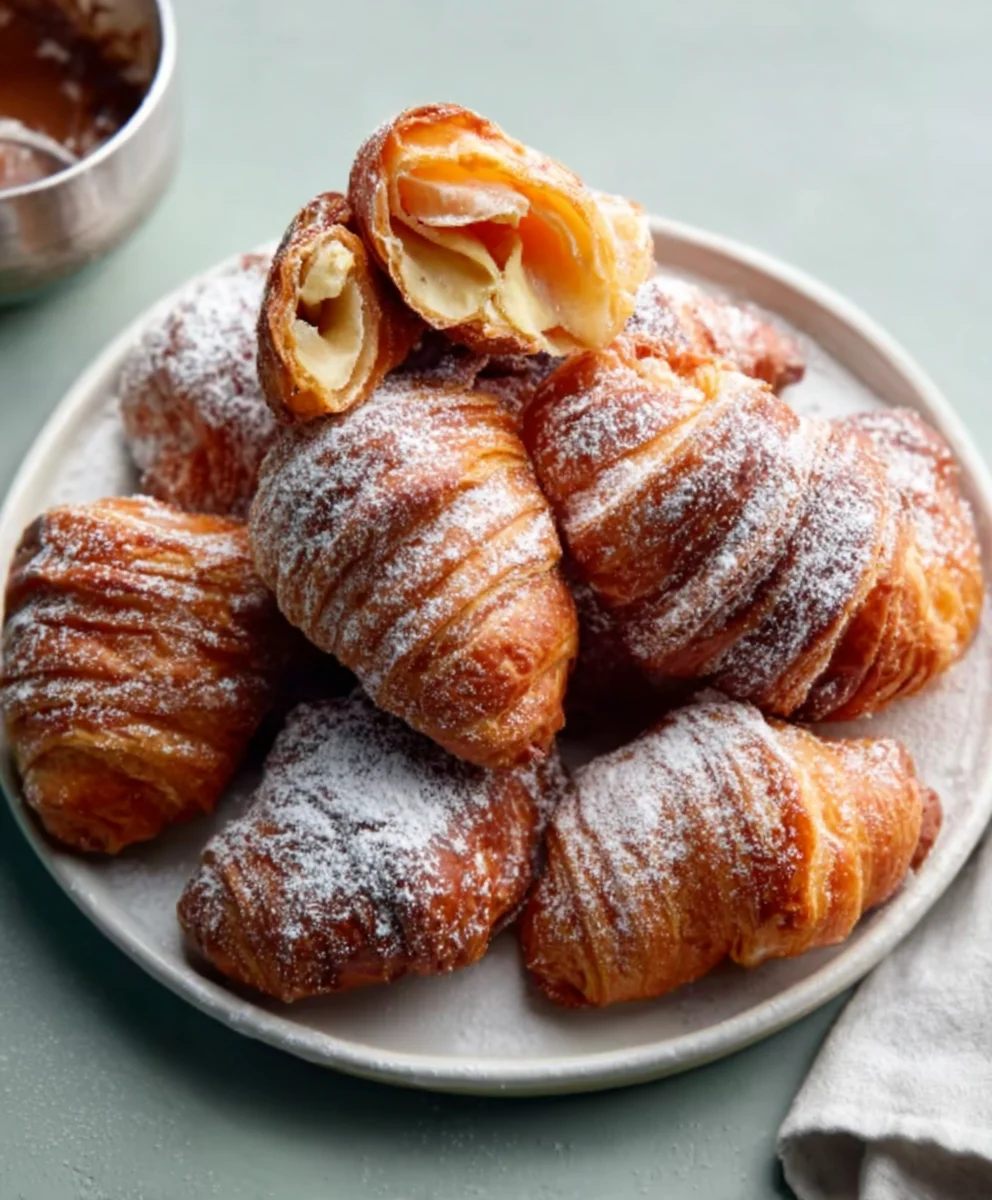
Fried Croissant Beignets are more than just a pastry; they’re a little piece of heaven, a decadent indulgence that has captured the hearts (and taste buds) of many. Imagin extracte biting into a cloud-like interior, encased in a delicate, shatteringly crisp shell, all dusted with a generous snowfall of powdered sugar. It’s the perfect blend of familiar comfort and elevated deliciousness. What is it about these golden beauties that makes them so irresistible? It’s the magical transformation of a beloved croissant into something even more extraordinary. We take the flaky, buttery layers you adore and give them a quick, glorious bath in hot oil, creating a texture that’s utterly addictive. This isn’t your average doughnut; the inherent elegance of the croissant elevates these fried delights to a whole new level, making them a true showstopper for any brunch, dessert, or simply a special treat you deserve. Get ready to experience the magic of Fried Croissant Beignets!
Ingredients:
- 60 ml (1/4 cup) milk, warmed
- 120 ml (1/2 cup) water, lukewarm
- 21 g (2 tbsp 1 tsp) active dry yeast
- 50 g (1/4 cup) granulated sugar
- 550 g (4 1/2 cups) Manitoba flour (or bread flour)
- 2 large eggs
- 1 large egg yolk
- 1 tbsp rum extract extract (optional)
- 5 g (3/4 tsp) salt
- 70 g (1/3 cup) unsalted butter, softened
- 750 ml (3 1/2 cups) vegetable oil, for frying
- 80 g (1/3 cup) granulated sugar
- 40 g (1/3 cup) powdered sugar
- 1 tsp cinnamon powder
- 350 g (12 oz) Chocolate Spread (like Lino Lada)
Preparing the Dough
Step 1: Activating the Yeast
First, we need to wake up our yeast and get it ready to do its magic. In a medium-sized bowl, combine the warmed milk and lukewarm water. Sprinkle the active dry yeast over the liquid. Add the first portion of granulated sugar (50g). Give it a gentle stir to combine. Let this mixture sit undisturbed for about 5-10 minutes. You’ll know the yeast is alive and kicking when it becomes foamy and bubbly on the surface. This foam indicates that the yeast is feeding on the sugar and releasing carbon dioxide, which is essential for making our Fried Croissant Beignets light and airy. If you don’t see any foam, your yeast might be expired, and you’ll need to start with fresh yeast.
Step 2: Mixing the Dough
Once your yeast mixture is activated, pour it into a large mixing bowl. Add the Manitoba flour (or bread flour) and the salt. If you’re using a stand mixer with a dough hook attachment, start mixing on a low speed until the ingredients just begin extract to come together. If you’re mixing by hand, use a sturdy spoon or spatula to combine everything until a shaggy dough forms. At this stage, the dough will be quite sticky. Now, it’s time to incorporate the eggs and the egg yolk. Crack the eggs directly into the bowl and add the egg yolk. If you’re usrum extract the rum extract for an extra flavor boost, add it now. Continue mixing, either with the dough hook on medium speed or by hand, until the dough starts to pull away from the sides of the bowl. This process might take a few minutes.
Step 3: Kneading and Enriching the Dough
This is where we develop the gluten, which gives our beignets their characteristic chegrape juicess and structure. If you’re using a stand mixer, increase the speed to medium and let the dough knead for about 8-10 minutes. If you’re kneading by hand, turn the dough out onto a lightly floured surface and knead for about 10-12 minutes. The dough should become smooth, elastic, and less sticky. Now for the butter. Gradually add the softened unsalted butter, a tablespoon at a time, allowing each piece to be incorporated before adding the next. This step might seem a bit messy at first, but keep kneading. The dough will become very soft and potentially sticky again, but persevere! Eventually, the butter will be fully incorporated, and the dough will be smooth, soft, and slightly tacky but should spring back when gently poked. This enriched dough is key to the flaky, buttery texture of our Fried Croissant Beignets.
First Rise and Shaping
Step 4: The First Fermentation
Lightly grease a clean large bowl with a little oil or butter. Place the kneaded dough into the bowl, turning it once to coat all sides. Cover the bowl tightly with plastic wrap or a damp kitchen towel. Find a warm, draft-free spot in your kitchen for the dough to rise. This is often a slightly warm oven (turned off!) or a spot near the stove. Let the dough rise for about 1.5 to 2 hours, or until it has doubled in size. The exact time will depend on the warmth of your kitchen. This slow rise allows the yeast to develop flavor and create those airy pockets we’re looking for. You’ll notice a significant increase in volume. Gently punch down the dough to release the air.
Step 5: Shaping and Second Rise
Turn the risen dough out onto a lightly floured surface. Gently pat or roll the dough into a rectangle, about 1/2 inch thick. Now, we’re going to shape them like croissants. Cut the dough into long, triangular strips, about 3 inches wide at the base. For each triangle, make a small slit (about 1/2 inch) in the center of the wide base. Gently pull the two corners of the slit slightly apart to create a small opening. Starting from the wide base, roll the dough up towards the point, stretching it slightly as you go. You should end up with a shape that resembles a crescent or a small croissant. Place the shaped beignets onto baking sheets lined with parchment paper, leaving about 2 inches of space between each one. Cover them loosely with plastic wrap or a clean kitchen towel and let them rise again in a warm place for about 45-60 minutes, or until they are puffy and have increased in size by about 50%.
Frying and Finishing
Step 6: Frying to Golden Perfection
Once the beignets have completed their second rise, it’s time to fry them. Pour the vegetable oil into a large, heavy-bottomed pot or Dutch oven, ensuring there’s enough depth for the beignets to float freely (at least 2-3 inches). Heat the oil over medium heat to a temperature of 350-360°F (175-180°C). It’s crucial to maintain this temperature for even cooking. If the oil is too hot, the beignets will burn on the outside before cooking through. If it’s too cool, they will absorb too much oil and become greasy. Carefully place 2-3 beignets into the hot oil at a time, being careful not to overcrowd the pot. Fry them for about 2-3 minutes per side, until they are puffed up, golden brown, and beautifully cooked through. Use a slotted spoon or spider strainer to gently turn them and to lift them out of the oil. Place the fried beignets on a wire rack set over a baking sheet to drain any excess oil.
Step 7: Glazing and Filling
While the beignets are still warm and slightly crispy from frying, it’s time for the final touches. In a small bowl, combine the second portion of granulated sugar (80g) with the cinnamon powder and powdered sugar (40g). This mixture will be our delicious coating. Gently roll the warm beignets in this cinnamon-sugar mixture until they are evenly coated. Alternatively, you can just dust them generously with the powdered sugar and cinnamon mixture. For the chocolate filling, transfer your Chocolate Spread into a piping bag fitted with a narrow tip, or use a small spoon. Make a small hole in the side or bottom of each beignet and carefully fill them with the luscious chocolate spread. Serve your Fried Croissant Beignets immediately while they are still warm and wonderfully decadent.

Conclusion:
And there you have it – your very own batch of delicious Fried Croissant Beignets! We’ve walked through each simple step, from transforming leftover croissants into pillowy delights to achieving that perfect golden-brown crispness. These aren’t just pastries; they’re a celebration of simple ingredients elevated into something truly special. I truly hope you enjoy making and sharing these wonderful treats as much as I do.
Serve these warm, dusted generously with powdered sugar, or get creative! They are absolutely divine with a dollop of fresh whipped cream, a drizzle of chocolate sauce, or even a side of fruit compote. For variations, consider adding a pinch of cinnamon or nutmeg to the dough mixture, or perhaps even a splash of vanilla extract for an extra layer of flavor. Don’t be afraid to experiment with different dipping sauces too – raspberry coulis or caramel would be fantastic.
The beauty of Fried Croissant Beignets lies in their versatility and ease. They’re perfect for a weekend brunch, a special dessert, or even a delightful afternoon pick-me-up. So gather your ingredients, embrace the fun of frying, and enjoy the wonderfully satisfying results. Happy baking (or rather, frying)!
Frequently Asked Questions:
Can I use fresh croissants instead of day-old ones?
While day-old croissants work best because they have lost some moisture and hold their shape better during the cutting and frying process, you can use fresh ones. Just be sure they are completely cooled and slightly firm before proceeding. If they are very soft, they might be more challengin extractg to handle.
What is the best oil to use for frying?
A neutral-flavored oil with a high smoke point is ideal. Vegetable oil, canola oil, or peanut oil are excellent choices for achieving perfectly golden and crispy Fried Croissant Beignets without imparting any unwanted flavors.
Can I make the dough ahead of time?
The beauty of this recipe is that it uses pre-made croissants, so there isn’t really a “dough” to make ahead in the traditional sense. You can cut your croissants into pieces a few hours in advance and store them covered at room temperature before frying. This can help save time if you’re planning to serve them for a specific meal.
Fried Croissant Beignets – Easy Dessert Recipe
An easy recipe for delicious, airy, and decadent fried croissant beignets filled with chocolate spread and coated in a cinnamon-sugar mixture.
Ingredients
-
60 ml (1/4 cup) milk
-
120 ml (1/2 cup) water, lukewarm
-
21 g (2 tbsp 1 tsp) active dry yeast
-
50 g (1/4 cup) granulated sugar
-
550 g (4 1/2 cups) Manitoba flour (or bread flour)
-
2 large eggs
-
1 large egg yolk
-
1 tbsp vanilla extract (optional, substitute for rum extract)
-
5 g (3/4 tsp) salt
-
70 g (1/3 cup) unsalted butter, softened
-
750 ml (3 1/2 cups) vegetable oil, for frying
-
80 g (1/3 cup) granulated sugar
-
40 g (1/3 cup) powdered sugar
-
1 tsp cinnamon powder
-
350 g (12 oz) Chocolate Spread (like Lino Lada)
Instructions
-
Step 1
Activate yeast: In a bowl, combine warmed milk, lukewarm water, active dry yeast, and 50g granulated sugar. Let sit for 5-10 minutes until foamy. -
Step 2
Mix dough: Pour activated yeast into a large bowl with flour and salt. Mix until shaggy. Add eggs, egg yolk, and vanilla extract (if using). Mix until dough pulls away from the bowl. -
Step 3
Knead and enrich: Knead dough for 8-12 minutes until smooth and elastic. Gradually add softened butter, a tablespoon at a time, until fully incorporated. Dough should be smooth and slightly tacky. -
Step 4
First rise: Place dough in a greased bowl, cover, and let rise in a warm place for 1.5-2 hours, or until doubled. Punch down the dough. -
Step 5
Shape and second rise: Roll dough into a 1/2 inch thick rectangle. Cut into long, triangular strips (3 inches wide). Make a slit in the base of each triangle, then roll from the base to the point, creating a crescent shape. Place on parchment-lined baking sheets, cover, and let rise for 45-60 minutes until puffy. -
Step 6
Fry beignets: Heat vegetable oil to 350-360°F (175-180°C). Fry 2-3 beignets at a time for 2-3 minutes per side until golden brown. Drain on a wire rack. -
Step 7
Glaze and fill: Combine 80g granulated sugar, powdered sugar, and cinnamon powder. Roll warm beignets in the mixture. Fill with chocolate spread using a piping bag or spoon.
Important Information
Nutrition Facts (Per Serving)
It is important to consider this information as approximate and not to use it as definitive health advice.
Allergy Information
Please check ingredients for potential allergens and consult a health professional if in doubt.